
Journal · GUIDE · 6 MIN
The Gems of Sri Lanka: A Collector's Guide
Sapphire made the island famous. It is only the beginning.
By the Canix Gems team, Colombo · 25 Nov 2026
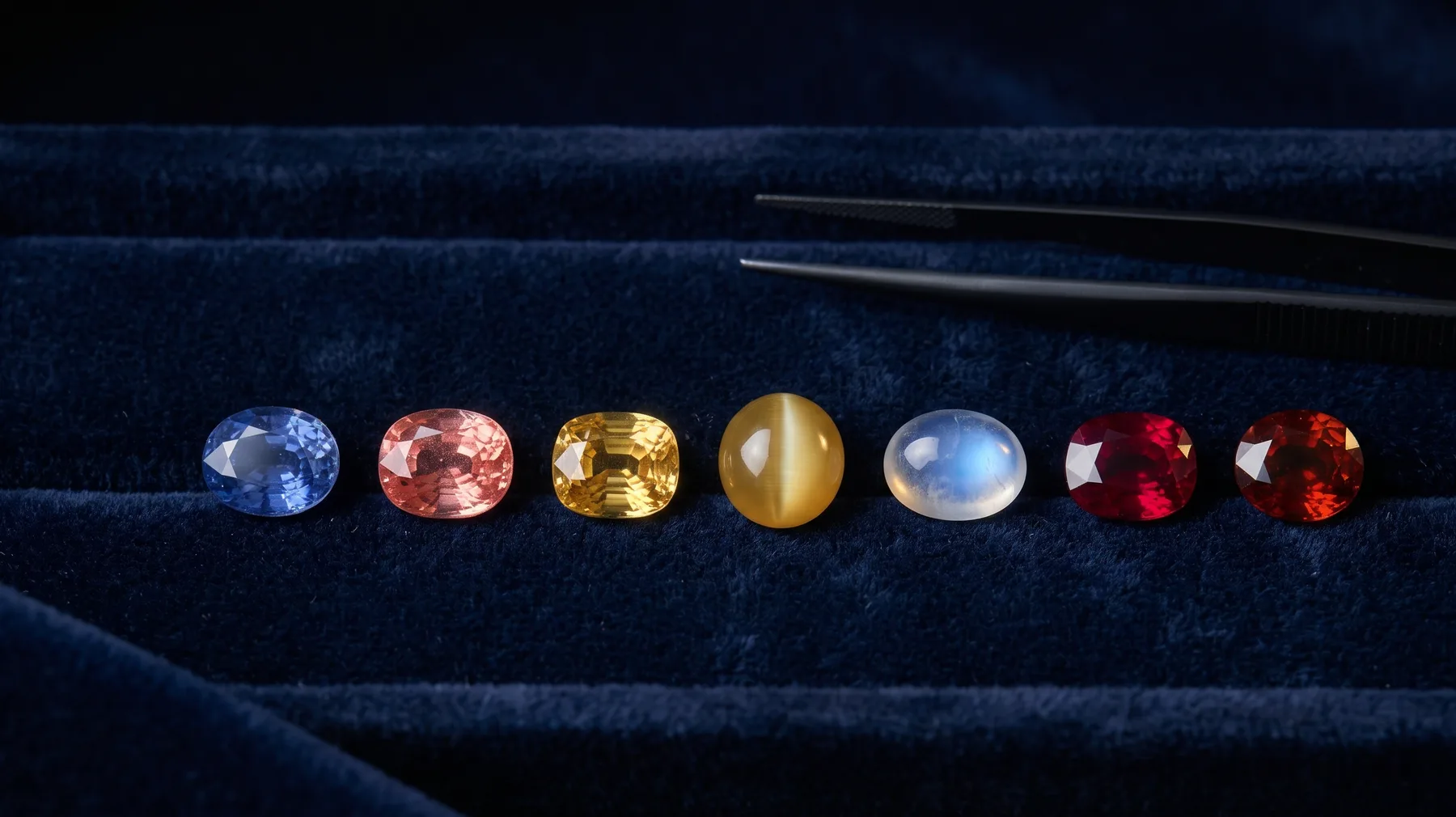
Sri Lanka is best known for sapphire and ruby, but the island produces more than 70 gem varieties. Most belong to five great families: corundum, chrysoberyl, spinel, garnet and tourmaline. The main gem fields are around Ratnapura in the south-west and Elahera in the centre of the island, where large alluvial deposits hold most of the coloured stones.
The gems at a glance
| Gem | Family | Typical colours | Where in Sri Lanka | What collectors look for |
|---|---|---|---|---|
| Blue sapphire | Corundum | Pale cornflower to deep royal blue | Ratnapura, Elahera | Bright, even blue; unheated stones command a premium |
| Padparadscha | Corundum | Pinkish orange, "lotus colour" | Ratnapura | A delicate balance of pink and orange, neither too pale nor too dark |
| Pink, yellow and star sapphire | Corundum | Pink, golden yellow, blue with a six-rayed star | Ratnapura, Elahera | Clean colour; for stars, a sharp, centred star |
| Ruby | Corundum | Pinkish red, often with a hint of purple | Embilipitiya–Udawalawe for finer stones | Strong red with good brightness |
| Cat's eye | Chrysoberyl | Honey to greenish yellow | Ratnapura, Matale | A sharp, straight band of light; the "milk and honey" effect |
| Alexandrite | Chrysoberyl | Green by day, red-purple by lamplight | Ratnapura | A strong, clear colour change |
| Spinel | Spinel | Red, pink, blue, violet, grey | Across the gem fields | Pure, saturated colour; often untreated |
| Moonstone | Feldspar | White with a floating blue sheen | Meetiyagoda | A strong blue sheen that moves across the stone |
| Garnet | Garnet | Hessonite orange-brown, almandine red | Across the gem fields | Lively colour and clarity |
| Zircon ("Matara diamond") | Zircon | Colourless, yellow, green, brown | Southern province | High brilliance and fire |
| Tourmaline, topaz, aquamarine, quartz | Various | Wide range | Across the gem fields | Clean, well-cut stones |
Blue sapphire: the island's signature
Of the three classic sources of blue sapphire, Burma, Kashmir and Sri Lanka, the island has been by far the most prolific. Ceylon blue is known for its brightness: a lively, often lighter blue that stays vivid in candlelight and daylight alike. Look closely at a fine Ceylon sapphire and you may see silky rutile needles, a natural signature of Sri Lankan origin.
Padparadscha: the lotus stone
The name comes from the Sinhala padma raga, the colour of the lotus flower. A true padparadscha is a rare blend of pink and orange, like a tropical sunset. Sri Lanka is the classic source, and connoisseurs prize it above almost every other coloured stone.
Cat's eye and alexandrite: the chrysoberyl wonders
Sri Lanka is one of the world's primary sources of cat's eye chrysoberyl. Cut as a smooth dome, the finest stones show a bright, razor-sharp band of light that seems to open and close as the stone turns. Alexandrite, the colour-change chrysoberyl, can shift from bluish green in daylight to purplish red under warm light, earning it the name "emerald by day, ruby by night".
Moonstone: light on water
From the Meetiyagoda area in the south comes moonstone with a soft blue sheen that glides across the surface like moonlight on the sea. Sri Lanka's blue-sheen moonstone is widely regarded as the finest in the world.
Spinel: the overlooked treasure
For centuries, red spinel was mistaken for ruby, even in famous crown jewels. Today collectors seek it out for its pure, bright colour, and Sri Lanka is one of the world's top producers, with spinel in red, pink, blue, violet and grey.
From the soil of Ratna-Dweepa to your hand.
Every stone documented, every origin true.
Explore the collection