
Journal · HISTORY · 5 MIN
Two Thousand Years of Ceylon Gems
Kings, emperors, explorers and royal brides have all owned a piece of this island.
By the Canix Gems team, Colombo · 26 Nov 2026
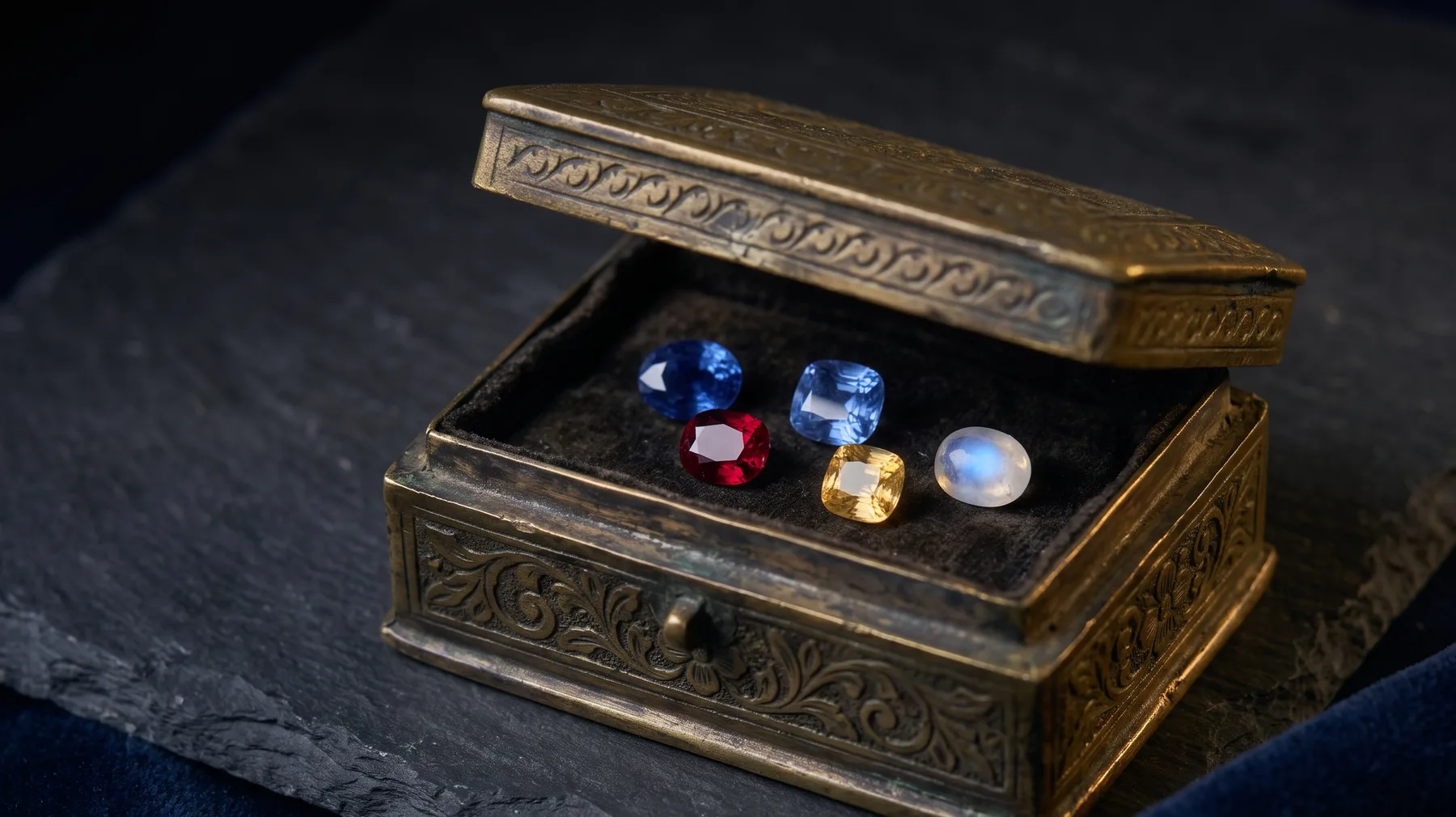
Gemstone use in Sri Lanka dates back at least 2,000 years, and the island's position on the great trade routes of the Indian Ocean made it one of the world's most important gem sources. Few places can match that history as both a producer and a trading centre.
From the Mahavamsa to the online market of today, the constant is the same: when the world wants the finest coloured gems, it looks to this island.
Ancient kings and Roman emperors
The island's own Great Chronicle, the Mahavamsa, mentions a gem-encrusted throne belonging to a Naga king, in an account dated to 543 BC. Four centuries later, the Roman naturalist Pliny the Elder recorded that envoys from Taprobane, as Rome knew the island, boasted of its fine gems at the court of Emperor Claudius (AD 41–54). The astronomer Ptolemy noted in the 2nd century that beryl and sapphire were the mainstay of the island's gem trade.
The jewels of Serendib
By the 4th and 5th centuries, Persian and Arab sailors were carrying "the jewels of Serendib" across the Indian Ocean. Around 1300, the Venetian traveller Marco Polo described the island king's ruby, as long as the palm of a hand and as thick as three fingers, as the most beautiful in the world, burning like fire. He also wrote that the island had the best sapphires and topazes anywhere.
Colonial trade, royal crowns
Under Portuguese (1505–1656), Dutch (1656–1796) and British (1796–1948) rule, the gem trade expanded beyond the royal family as European merchants carried Ceylon stones west. Ceylon sapphires found their way into royal and imperial jewels, including a sapphire brooch Prince Albert gave Queen Victoria on the eve of their wedding.
Giants of the 20th century
Sri Lanka has produced many of the world's most famous sapphires:
- The Star of India, a 563 ct star sapphire, discovered in Sri Lanka and given to the American Museum of Natural History in 1900 by J.P. Morgan.
- The Logan Sapphire, 423 ct, one of the largest faceted blue sapphires in the world, now at the Smithsonian in Washington.
- The Blue Belle of Asia, about 400 ct, said to have been found in a paddy field in the Ratnapura district in 1926, with a prized cornflower blue.
- The 12 ct Ceylon sapphire in the engagement ring of Diana, Princess of Wales, now worn by the Princess of Wales.
- The Pride of Sri Lanka, an 850 ct blue sapphire found in Ratnapura in 1998.
Today
After a quieter 20th century, Sri Lanka's gem industry has grown fast again, combining traditional mining and cutting with modern laboratories and global trade. Online gem exports are now officially permitted, and the National Gem and Jewellery Authority has set a target of USD 1 billion in exports for 2026. Canix Gems is part of that new chapter.
From the soil of Ratna-Dweepa to your hand.
Every stone documented, every origin true.
Explore the collection